UI / UX Design
Facebook Marketplace Re-Design
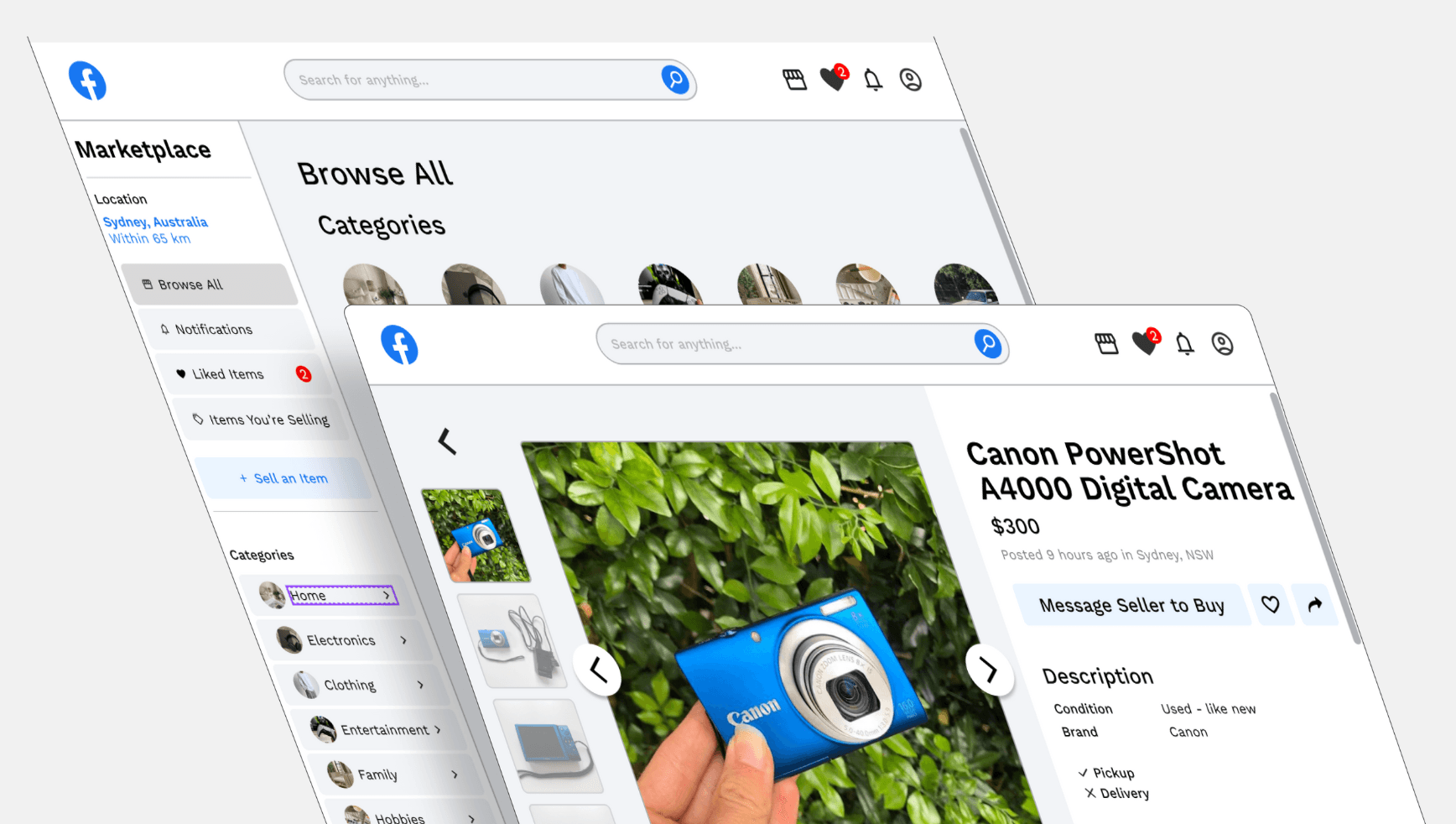
Redesigned Facebook Marketplace to improve trust, transparency, and navigation for buyers, using research-driven insights and a custom design system built in Figma.
Year :
2024
Client :
University Project
Project Duration :
10 weeks
My Role :
UX/UI Designer

Problem :
Buyers on Facebook Marketplace struggle with trust and transparency due to vague seller information, scattered reviews, and inconsistent product details. Navigation and delivery tracking are also clunky, creating a frustrating shopping experience.

Solution :
I redesigned the Marketplace interface to make shopping simpler, safer, and more reliable:
Introduced verified seller profiles with clear metrics (items sold, ratings).
Added commented reviews under products for richer buyer feedback.
Improved sorting and filtering to help users find items faster.
Streamlined delivery tracking for clearer order updates.
Built a design system in Figma to ensure consistency and scalability.

Challenge :
The biggest challenge was translating broad pain points into actionable design changes without overwhelming the interface. I had to balance simplicity and detail: providing more information for trust while keeping the shopping flow fast and intuitive.
Research & Insights :
Survey (46 responses) → Biggest pain point = seller trust.
Interviews → Need for richer reviews, seller transparency, better delivery tracking.
Main insights → Trust + seamless shopping = priorities.
Summary :
This redesign shows how UX research can translate directly into interface improvements. By addressing trust, transparency, and navigation, the updated Marketplace concept creates a more confident, reliable, and enjoyable shopping experience.
Key Takeaways :
Learned how to translate user research into interface improvements that directly solve pain points.
Gained experience building a design system in Figma for consistent, scalable UI.
Realised the importance of balancing information density with simplicity in e-commerce design.
Developed confidence in conducting surveys and interviews to back design decisions with evidence.

More Projects


UI / UX Design
Facebook Marketplace Re-Design
Redesigned Facebook Marketplace to improve trust, transparency, and navigation for buyers, using research-driven insights and a custom design system built in Figma.
Year :
2024
Client :
University Project
Project Duration :
10 weeks
My Role :
UX/UI Designer
Problem :
Buyers on Facebook Marketplace struggle with trust and transparency due to vague seller information, scattered reviews, and inconsistent product details. Navigation and delivery tracking are also clunky, creating a frustrating shopping experience.
Solution :
I redesigned the Marketplace interface to make shopping simpler, safer, and more reliable:
Introduced verified seller profiles with clear metrics (items sold, ratings).
Added commented reviews under products for richer buyer feedback.
Improved sorting and filtering to help users find items faster.
Streamlined delivery tracking for clearer order updates.
Built a design system in Figma to ensure consistency and scalability.
Challenge :
The biggest challenge was translating broad pain points into actionable design changes without overwhelming the interface. I had to balance simplicity and detail: providing more information for trust while keeping the shopping flow fast and intuitive.
Research & Insights :
Survey (46 responses) → Biggest pain point = seller trust.
Interviews → Need for richer reviews, seller transparency, better delivery tracking.
Main insights → Trust + seamless shopping = priorities.
Summary :
This redesign shows how UX research can translate directly into interface improvements. By addressing trust, transparency, and navigation, the updated Marketplace concept creates a more confident, reliable, and enjoyable shopping experience.
Key Takeaways :
Learned how to translate user research into interface improvements that directly solve pain points.
Gained experience building a design system in Figma for consistent, scalable UI.
Realised the importance of balancing information density with simplicity in e-commerce design.
Developed confidence in conducting surveys and interviews to back design decisions with evidence.
More Projects
UI / UX Design
Facebook Marketplace Re-Design
Redesigned Facebook Marketplace to improve trust, transparency, and navigation for buyers, using research-driven insights and a custom design system built in Figma.
Year :
2024
Client :
University Project
Project Duration :
10 weeks
My Role :
UX/UI Designer
Problem :
Buyers on Facebook Marketplace struggle with trust and transparency due to vague seller information, scattered reviews, and inconsistent product details. Navigation and delivery tracking are also clunky, creating a frustrating shopping experience.
Solution :
I redesigned the Marketplace interface to make shopping simpler, safer, and more reliable:
Introduced verified seller profiles with clear metrics (items sold, ratings).
Added commented reviews under products for richer buyer feedback.
Improved sorting and filtering to help users find items faster.
Streamlined delivery tracking for clearer order updates.
Built a design system in Figma to ensure consistency and scalability.
Challenge :
The biggest challenge was translating broad pain points into actionable design changes without overwhelming the interface. I had to balance simplicity and detail: providing more information for trust while keeping the shopping flow fast and intuitive.
Research & Insights :
Survey (46 responses) → Biggest pain point = seller trust.
Interviews → Need for richer reviews, seller transparency, better delivery tracking.
Main insights → Trust + seamless shopping = priorities.
Summary :
This redesign shows how UX research can translate directly into interface improvements. By addressing trust, transparency, and navigation, the updated Marketplace concept creates a more confident, reliable, and enjoyable shopping experience.
Key Takeaways :
Learned how to translate user research into interface improvements that directly solve pain points.
Gained experience building a design system in Figma for consistent, scalable UI.
Realised the importance of balancing information density with simplicity in e-commerce design.
Developed confidence in conducting surveys and interviews to back design decisions with evidence.